
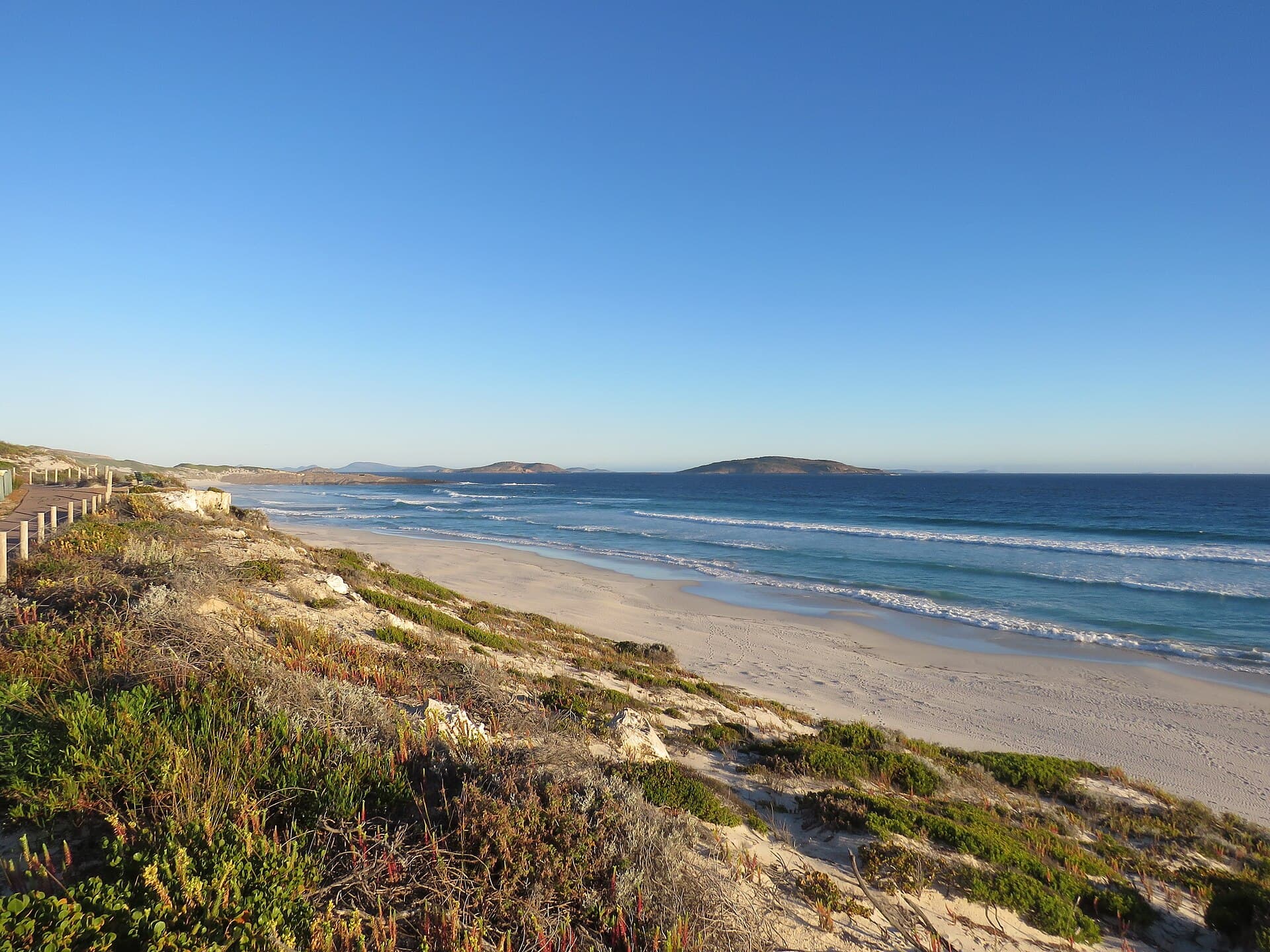
Esperance is famous for white-sand beaches, turquoise water and Lucky Bay — but for Working Holiday makers it is also one of Western Australia's major agricultural regions.
Top photo: Fourth Beach, Esperance. Photo: Calistemon, CC BY-SA 4.0, via Wikimedia Commons.
The country around Esperance is a large broadacre farming zone. Wheat, barley, canola and livestock are a major part of the local economy. Farm work here looks different from Carnarvon or northern Queensland: instead of a fruit-picking season, backpackers are more likely to find grain harvest, machinery, farm-hand, livestock and seasonal labouring roles.
Esperance is remote. It is a long way from Perth, and arriving in town does not mean you will immediately find work. Here is what to know before you make the trip.
Where is Esperance?
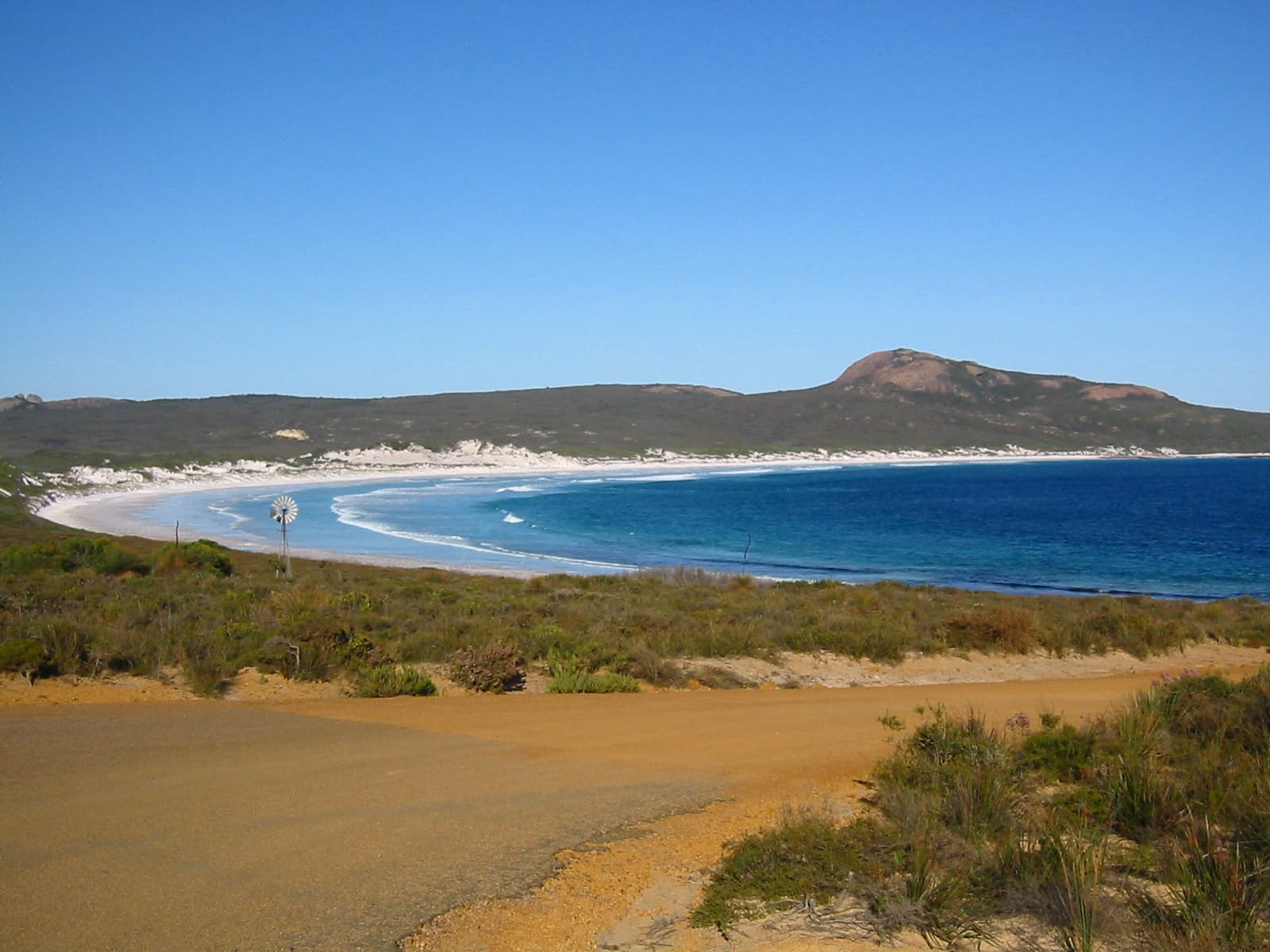
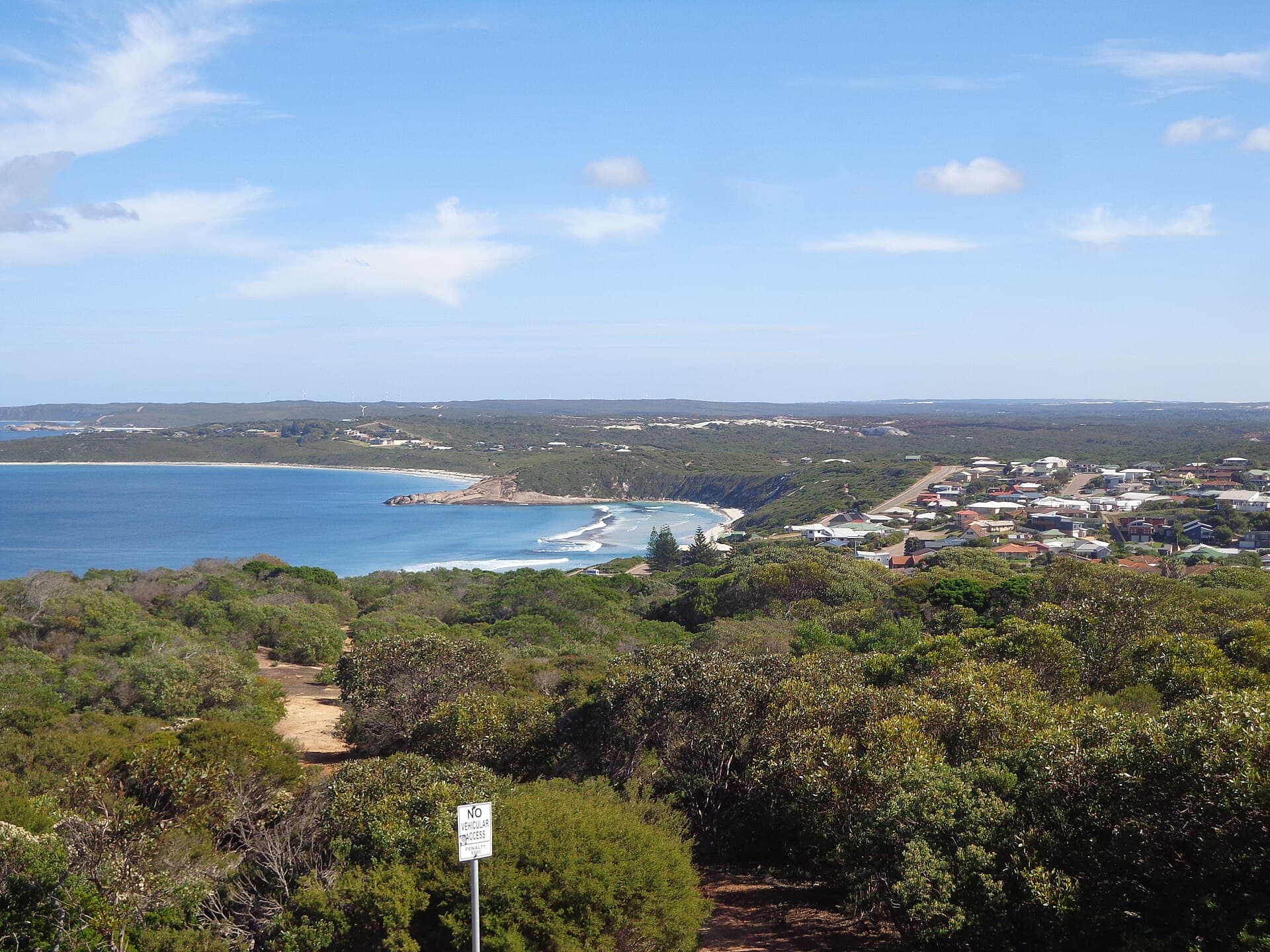
Esperance sits on the south coast of Western Australia, around 700 km southeast of Perth. Driving from Perth usually takes around eight hours, depending on your route and stops. Many travellers break the journey through the Wheatbelt rather than doing the whole drive in one stretch.
That distance matters if you are travelling specifically for work. A Facebook post saying farms around Esperance are hiring is not enough reason to drive hundreds of kilometres. Confirm the employer, location, start date and accommodation before you leave Perth. Esperance itself is a regional town, but many properties sit well outside the town centre.
Esperance weather: what is it actually like?
Esperance is much cooler than northern Western Australia. Long-term Bureau of Meteorology figures for the Esperance station show mean daytime maximum temperatures of about:
| Month | Average max |
|---|---|
| January | 26°C |
| February | 26°C |
| March | 25°C |
| April | 23°C |
| May | 21°C |
| June | 18°C |
| July | 17°C |
| August | 18°C |
| September | 20°C |
| October | 21°C |
| November | 23°C |
| December | 25°C |
Rounded from Bureau of Meteorology mean maximum temperatures, Esperance station (009789). Check the current table before you pack.
That sounds mild, but conditions change quickly. Summer days can still be hot, and winter mornings can feel cold if you are outside before sunrise — July mean minima at the same station sit around 8°C. Esperance is also exposed to coastal wind.
For harvest workers, weather matters for another reason. Grain harvesting can stop for rain, fire danger or a harvest movement ban. The Shire of Esperance can impose Harvest and Vehicle Movement Bans when conditions create a high fire risk.
What is grown around Esperance?
Esperance is not primarily a fruit-picking destination. The surrounding farming region is strongly associated with broadacre agriculture, including:
- wheat
- barley
- canola
- pulses and other grain crops
- livestock, particularly sheep and cattle
The Department of Primary Industries and Regional Development runs the Esperance Downs Research Station near Gibson, covering grain production, cropping systems and livestock. If you only search "fruit picking Esperance", you will miss most of the local work. Search harvest worker, farm hand, grain harvest, machinery operator, chaser bin driver, tractor driver and general farm worker instead.
Best months for farm work in Esperance
The main seasonal opportunity follows the grain-growing and harvest cycle. These windows move with weather and crop conditions — they are not guaranteed dates.
April–June
This is typically around the start of the grain-growing season. Jobs may include seeding support, machinery work, farm maintenance, general farm-hand duties and livestock work. DPIRD notes that the grain growing season across much of southern WA generally runs from around May through October, although timing varies by location and season.
July–September
Crop work continues, often with fewer large recruitment spikes than harvest. General farm-hand and livestock roles can still appear.
October–January
This is the period to watch. Grain harvest activity increases across the Esperance farming region. Seasonal jobs can include header operators, tractor drivers, chaser-bin operators, truck drivers, grain handling, farm hands, machinery support and general harvest labour. Workforce Australia lists seasonal harvest vacancies that can include Esperance — those ads change, so treat a listing as a reason to search, not a job that is still open.
What kind of farm jobs can you get?
Around Esperance you may see roles advertised as:
- Harvest worker
- Farm hand
- General farm worker
- Tractor driver
- Header operator
- Chaser-bin operator
- Machinery operator
- Grain handler
- Truck driver
- Livestock worker
- Sheep station or farm worker
- Fencing or maintenance worker
Some machinery jobs need previous experience. If you have already driven tractors, trucks or agricultural machinery, that helps during harvest recruitment. Not every job needs it. Farms also hire for general labour, grain handling, cleaning, maintenance and livestock work.
Do you need farming experience?
Not necessarily. For general farm-hand positions, employers may train someone who is reliable, physically capable and able to stay for the season.
For machinery roles, experience matters more. If an ad asks for previous tractor, header or chaser-bin experience, do not exaggerate. Large agricultural machinery is expensive and dangerous. A manual driving licence also opens more roles.
Where should you look for farm jobs?
Do not restrict your search to Esperance town. Look at the wider district, including:
- Gibson
- Condingup
- Grass Patch
- Scaddan
- Cascade
- Salmon Gums
- surrounding Esperance farming districts
Some properties are many kilometres outside town. When you contact an employer, ask for the exact farm location, not only whether the job is "in Esperance".
How to get to Esperance
Option 1: Drive from Perth
For farm work, your own vehicle is usually the most flexible option. Esperance is roughly an eight-hour drive from Perth, and properties may be far from public transport. A car also helps when you are applying to farms outside town.
Option 2: Coach
Long-distance coaches connect Perth and Esperance. That can work if your employer provides transport from town, or if accommodation is close to the workplace. Before you book, ask: "How do workers get from accommodation to the farm each morning?"
Option 3: Fly
Esperance has flights from Perth. Flying saves a long drive, but it does not solve transport once you land. A cheap fare gets expensive if the farm is 40 km out of town and you have no way to get there.
Do you need a car?
For many farm jobs around Esperance, a car is a major advantage. The problem is not getting around town. It is getting to a farm before sunrise when that farm might be 20, 30 or 50 kilometres away.
Some harvest employers provide accommodation on the property. Others organise shared transport. Ask before you accept the job.
Accommodation in Esperance
Esperance has:
- hostels
- caravan parks and holiday parks
- shared houses
- motels
- worker accommodation
- farm accommodation
Beds can get expensive or hard to find in busy tourism periods. Employer-provided accommodation is particularly useful for seasonal work. Before you commit, ask:
- How much is accommodation per week?
- Is it on the farm?
- Is transport included?
- Will rent be deducted from my wage?
- Do I need to provide a bond?
Do not assume accommodation is included just because the job is remote.
What backpackers should know before coming to Esperance
Esperance can combine regional work with one of the most spectacular stretches of coastline in Australia. It is not an easy place to arrive without a plan. The region is large, farms are spread out, and many seasonal roles depend on harvest timing.
If your main goal is work, try to confirm the employer, approximate start date, expected hours, accommodation, transport and farm location before you drive from Perth. The advantage is that harvest can create a concentrated burst of demand.
Can farm work in Esperance count towards your 88 days?
Agricultural work in regional Western Australia may count as specified work for eligible Working Holiday visa holders. Being in Esperance does not automatically make every job eligible.
It depends on your visa subclass, the type of work, the industry, the location and the current Department of Home Affairs rules. A role may count towards specified work requirements — it is not a guarantee. Check the official requirements, and our WHV guide, before you rely on a job for a second or third visa. If you are also looking further west along the south coast, see the Albany and Great Southern farm work guide.